
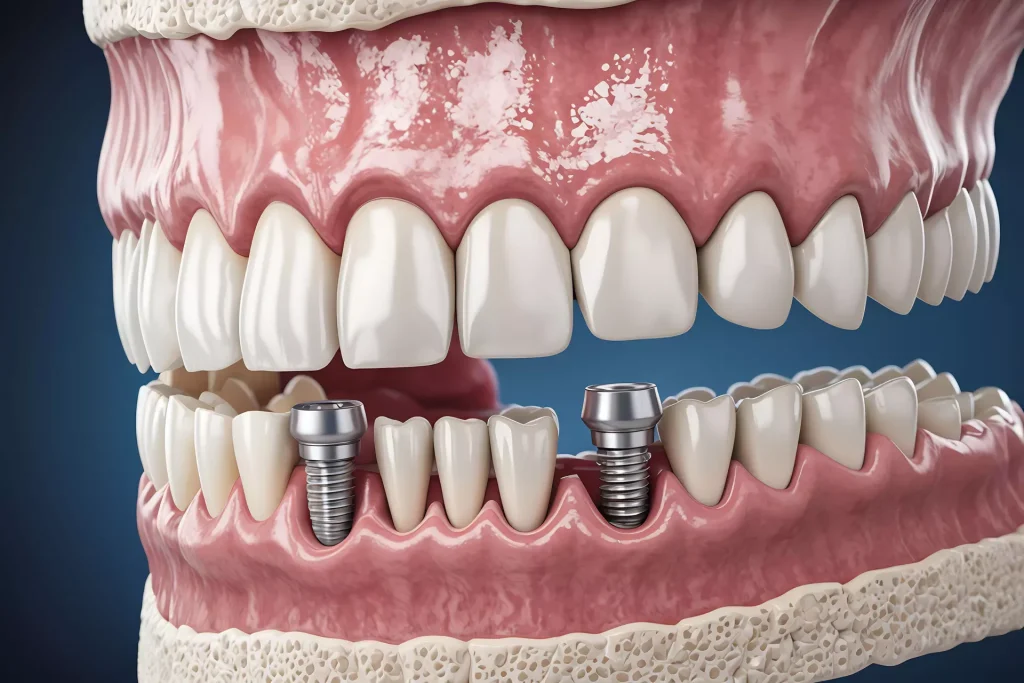
Dental implants are placed in the upper or lower jaw to replace the root of a missing tooth. A small metal post is surgically inserted into the jawbone, creating a stable foundation for a custom dental implant crown. Once healing is complete, the implant crown is securely attached, restoring the appearance, strength, and function of a natural tooth.
Book OnlineWhy Choose a Dental Implant Crown Over a Bridge?
When replacing missing teeth, both dental implant crowns and bridges can be effective solutions. However, dental implant crowns offer unique advantages that make them the preferred choice for many patients.
- Preservation of Natural Teeth: Dental implant crowns stand independently and do not rely on neighboring teeth for support. Unlike bridges, this means adjacent healthy teeth do not need to be altered or reduced.
- Longevity and Durability: Dental implant crowns are designed to be a long-term solution and can last a lifetime with proper care. Bridges typically require replacement every 10 to 15 years due to wear or decay.
- Bone Health and Preservation: The implant post stimulates the jawbone, preventing bone loss after tooth loss. This helps maintain facial structure and jaw strength, something bridges cannot provide.
- Natural Appearance and Function: A dental implant crown is custom-designed to match the color, shape, and size of your natural teeth, allowing it to look, feel, and function like a real tooth.
- Easy Oral Hygiene: Dental implant crowns can be brushed and flossed just like natural teeth. Bridges often require special cleaning tools and can be harder to maintain.
What Is the Dental Implant Crown Process?
Receiving a dental implant crown involves several carefully planned steps to ensure a strong, natural-looking result.
Treatment Plan
A personalized treatment plan is created based on your oral health, jawbone condition, and the number of teeth being replaced. This plan outlines every step of the implant and crown process.
Preparation and Pre-Surgical Procedures
If a damaged tooth is still present, it may be removed prior to or during implant placement. If the jawbone lacks sufficient density, a bone graft may be recommended to create a stable foundation for the implant.
Implant Placement
The dental implant, a small titanium post, is surgically placed into the jawbone. This procedure is typically performed under local anesthesia, with sedation options available for comfort.
A healing period of several months allows the implant to fuse with the bone, creating a secure base for the dental implant crown.
Final Restoration
Once healing is complete, impressions are taken to create a custom dental implant crown. The crown is then attached to the implant abutment, restoring full chewing function and a natural-looking smile.
What Home Care Is Needed?
Dental implant crowns require the same care as natural teeth, including daily brushing, flossing, and regular dental cleanings. We also strongly recommend wearing a nightguard if you grind your teeth, as excessive pressure can compromise the implant and crown.
Dental implant crowns provide a durable, natural-looking solution that preserves oral health and restores confidence. If you’re considering tooth replacement, Dr. Chokshi can help determine whether a dental implant crown is the right option for your smile.